Filipa Libania Architecture

Casinos não regulados em Portugal: o cassino selvagem que ninguém quer admitir

Os “casinos não regulados Portugal” operam como um bar de madrugada onde o barman não tem licença, mas ainda assim serve drinks a 3,5% de álcool. E ninguém percebe que o risco de ser barrado aumenta 27% a cada 1000 jogadas quando a plataforma foge ao controlo da Comissão de Jogos.

Como surgem as brechas: a engenharia do vazio regulatório

Quando a Autoridade de Jogos lança 12 novas regras num ano, três casas de apostas ainda conseguem lançar um site sem IP português, como se aproveitassem um “vacuum” de 0,08% das áreas de cobertura. Por exemplo, um site que se apresenta como “VIP” – mas “VIP” apenas significa “Vende‑i‑papo” – usa servidores nas Ilhas Cayman, onde a taxa de inspeção mensal cai para 0,2.

Programa casino Lisboa: o engodo que o turista sofisticado ignora

Mas o truque real está nos pagamentos. Um jogador médio deposita 150 € e, se a taxa de retenção for 1,2%, o operador guarda 1,8 € como lucro – praticamente “presente” grátis para o cassino. Enquanto isso, o cliente pensa que ganhou 10 % de “bonus”, mas a matemática real bate 12 vezes mais na conta do operador.

Casinos não regulados Portugal: casos concretos e armadilhas

BetPT, que ainda não apareceu na lista da DGOJ, oferece “free spins” em Starburst, mas cada giro tem probabilidade de 0,005 de aceder a um jackpot que nunca será pago porque o jackpot não está registrado em Portugal. A cada 200 giros, o jogador perde cerca de 4,6 € em taxas ocultas.

888casino, por outro lado, promove um “gift” de 20 € para novos usuários, mas só valida esse presente se o depósito inicial for superior a 100 € – o que equivale a 20% de “presente” que nunca chega ao bolso do jogador, mas ao lucro da casa.

O “melhor bónus sem depósito casino” é uma ilusão de marketing que você pode ainda evitar

Fora das marcas conhecidas, há operadores que copiam a interface do PokerStars, mas sem certificação. Eles criam tabelas de pagamento onde a volatilidade de Gonzo’s Quest parece uma montanha-russa de 1,6 % a 2,4 % de retorno, comparado ao retorno esperado de 96,5 % nos casinos regulados.

Quando um jogador tenta retirar 500 € após uma maré de vitórias, a operação pode demorar 7 dias úteis – três vezes mais do que o prazo de 2 dias nos operadores licenciados. Essa diferença se traduz em perdas de oportunidades de aposta, que podem valer até 30 € por dia em jogos de alta rotatividade.

Os termos de serviço desses sites muitas vezes escondem cláusulas como “o casino reserva‑se o direito de cancelar pagamentos superiores a 1 000 € sem aviso”. Um cálculo simples mostra que, se o jogador ganhar 1 200 €, perde 100 € só por violar a cláusula, além de pagar as taxas de transação que chegam a 2,5 %.

E ainda tem a questão da segurança de dados. Um provedor de hospedagem offshore pode ter um tempo de resposta de 3,8 s, enquanto um servidor regulado responde em 1,1 s. Cada segundo extra aumenta a vulnerabilidade a ataques de 0,7 % para 2,4 % de probabilidade de brecha de dados.

O contraste é gritante quando comparado a um slot como Starburst, que tem volatilidade baixa e tempo de carregamento de 0,9 s, versus um site não regulado que leva 4,2 s para iniciar o mesmo jogo. Essa latência não é só irritante; ela afeta a taxa de retorno em 0,3 %.

Jogadores experientes sabem que a “promoção de boas‑vindas” funciona como um caramelinho de dentista: parece doce, mas deixa um gosto amargo. Quando o “gift” termina, a casa aumenta a margem de lucro em 4 % nas próximas 50 apostas, transformando um suposto bônus em um peso extra.

Alguns usuários tentam contornar o problema usando carteiras digitais, mas descobrem que a taxa de conversão de € para criptomoeda pode ser de 1,4 % a 2 % dependendo do provedor, reduzindo ainda mais o capital disponível para jogar.

Eis a ironia final: o design da página de retirada tem um botão “Confirmar” com fonte de 9 pt, tão pequeno que até um rato poderia perder. Esta insignificância me deixa tão irritado quanto a promessa de “free” que nunca chega ao meu saldo.

Sanierung und Ausbau Mehrfamilienhaus,Zürich
2019-2022

work by Singer Baenziger Architekten, Zürich Switzerland

Das 100 jährige Haus mitten in einem Zürcher Quartier wurde komplett umgebaut und saniert. Die Wohnungen im Regelgeschoss wurden mit einer neuen Küche und Badezimmer ausgestattet. Das Haus wird durch einen ebenerdigen Neuen Zugang erschlossen und mit einem Lift ausgestattet. Die Mietwohnungen erhalten neue Verandas. Die Eigentümer entschlossen sich die 2 Dachwohnungen zusammenzulegen um eine grosse Dachwohnung zu haben, wobei der ganze Dachraum bis zum First genutzt wurde. Dadurch entstand einen grosszügigen Wohnraum. In seinem Zentrum befindet sich eine Kücheninsel mit Cheminée. Eine Lichtdurchflutete Loggia verbindet den Küchenbereich und die Terrasse Eine freistehende Wendeltreppe bildet das 2 Element im Wohnraum das eine Galerie im Dachgeschoss erschliesset wo sich eine weitere Terrasse befindet wo man den Sonnenuntergang über der Stadt geniessen kann.

copyright by Singer Baenziger Architekten, fotografia: Christian Senti

copyright by Singer Baenziger Architekten, fotografia: Christian Senti

copyright by Singer Baenziger Architekten, fotografia: Christian Senti

copyright by Singer Baenziger Architekten, fotografia: Christian Senti

copyright by Singer Baenziger Architekten, fotografia: Christian Senti

copyright by Singer Baenziger Architekten, fotografia: Christian Senti

copyright by Singer Baenziger Architekten, fotografia: Christian Senti

copyright by Singer Baenziger Architekten, fotografia: Christian Senti

copyright by Singer Baenziger Architekten, fotografia: Christian Senti

First I worked in a Zurich office with large infrastructure projects. There I learned a lot about complex planning and cooperation with government departments. During my master studies in Geneva, I discovered my passion for renovating small and medium-sized residential buildings. I love to integrate new elements into old structures and create something completely new without denying the old. During my exchange semester in Mozambique, I learned a lot about my flexibility to easily find my way even in less structured environments.

We solved all our real estate issues. Let me help you with yours.

In 2022 we bought a house and moved with our family to Portugal. So I know all obstacles. Sometimes there are shortcuts and sometimes one has to go patiently all the way through the bureaucracy.

I can help you with the following and more:

Ilha de Mozambique
2016

Thesis Diploma with distinction

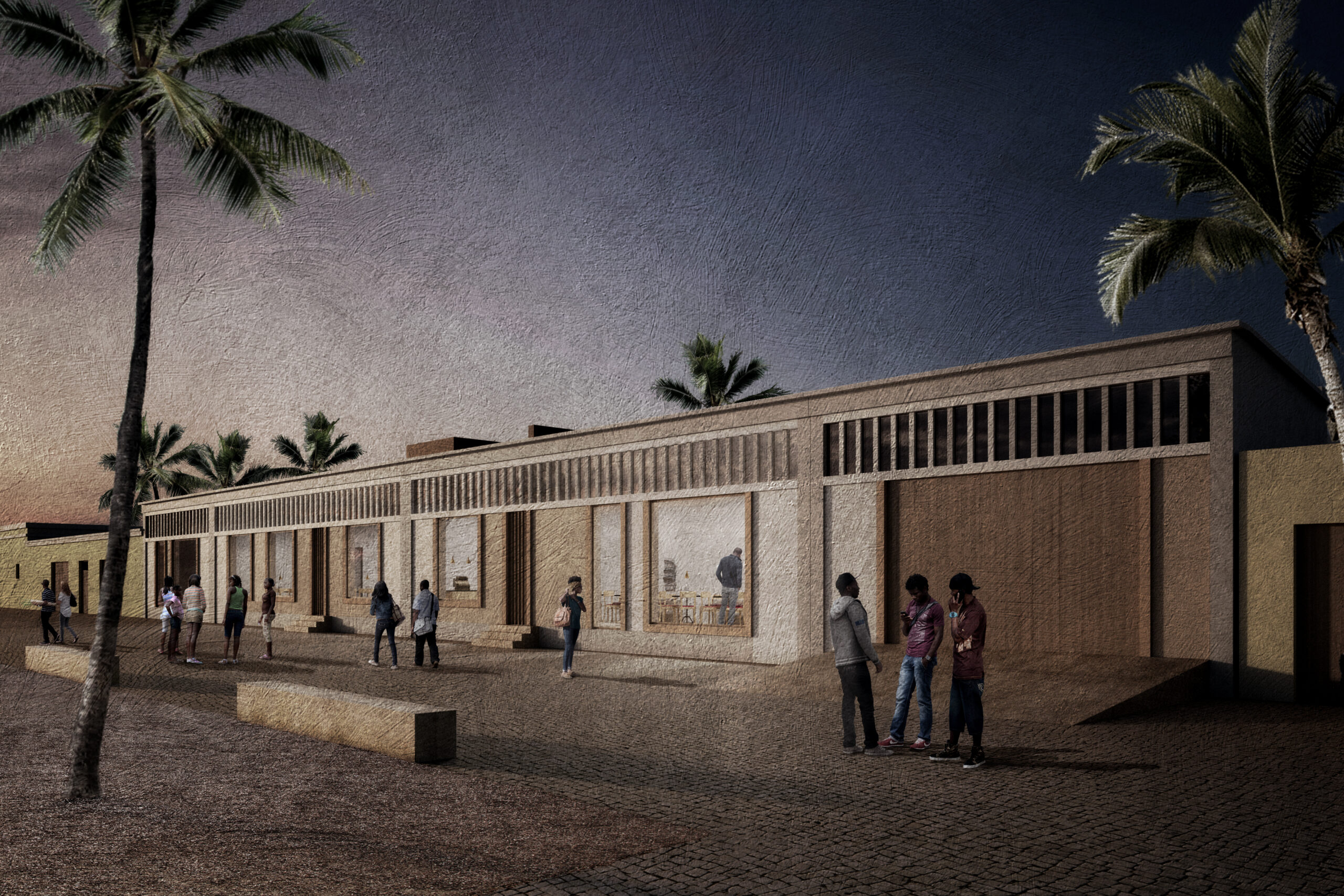
How is the connection of two identities possible without losing their independence and character? On Ilha de Mozambique today there are two different structures. One structure “Stone- Town” with European origin and character. The other “Makuti-Town”, which has its origin in the traditional African village. One focus of the work was the densification and reconstruction of a neighborhood in StoneTown. The concept was to provide the residents with living and working space, as well as water connections. For this I constructed a module. This module can then be purchased by the residents and filled as needed. The module consists of a commerce part that aligns with the street. This part is constructed ready to use, but leaves a large opening that the operator fills differently depending on the commerce.

Bus station Schwerzenbach , Zurich
2011-1017

work by 10zu8 Architekten, Zurich Switzerland

Redesign of bus terminal and station square

Processing open project competition 1st prize

The municipality of Schwerzenbach started a competition for the redesign of the station square. This included the improvement of the bus stop situation for the VBG and VBZ buses. This task included the design of a bus roof that would provide passengers with a dry waiting area. The bus roof extends over the length of the stopping edges and complements the situation at Schwerzenbach station with its concrete architecture. The ribbed roof of the new bus terminal grows tree-like from disc-shaped supports that follow the laterally offset stopping areas.

copyright by 10:8 Architekten, photo: René Dürr

copyright by 10:8 Architekten, photo: René Dürr

Train in the Limmattal, Zurich
2010-2022

work by 10zu8 Architekten, Zurich Switzerland

Processing of the construction project and tender between 2010-2013.

Urban planning analysis and design of the line stops

The train in the Limmattal is a new public transportation system that connects the most important settlement areas between Zurich-Altstetten and Killwangen, Argau. The line consists of 23 standard stops and 4 special stops. The standard stops were developed uniformly. The line has already been implemented up to the 1st stage.

copyright by 10:8 Architekten

Renovation and extension of apartment house, Zurich
2019-2022

work by Singer Baenziger Architekten, Zurich Switzerland

The 100 year old house in the middle of a Zurich neighborhood was completely rebuilt and renovated. The apartments on the regular floor were equipped with a new kitchen and bathroom. The house is accessed by a ground-level new entrance and equipped with an elevator. The rental apartments will receive new verandas. The owners decided to combine the 2 attic apartments to have one large attic apartment, using all the attic space up to the ridge. This created a spacious living area. In its center is a kitchen island with fireplace. A light-flooded loggia connects the kitchen area and the terrace. A free-standing spiral staircase forms the second element in the living space, which opens up a gallery in the attic where there is another terrace where you can enjoy the sunset over the city.

copyright by Singer Baenziger Architekten, photo: Christian Senti

copyright by Singer Baenziger Architekten, photo: Christian Senti

copyright by Singer Baenziger Architekten, photo: Christian Senti

copyright by Singer Baenziger Architekten, photo: Christian Senti

copyright by Singer Baenziger Architekten, photo: Christian Senti

copyright by Singer Baenziger Architekten, photo: Christian Senti

copyright by Singer Baenziger Architekten, photo: Christian Senti

copyright by Singer Baenziger Architekten, photo: Christian Senti

Renovation & extension row house Guggachstrasse Zurich2018-2019

Work by Singer Baenziger Architekten, Zurich Switzerland

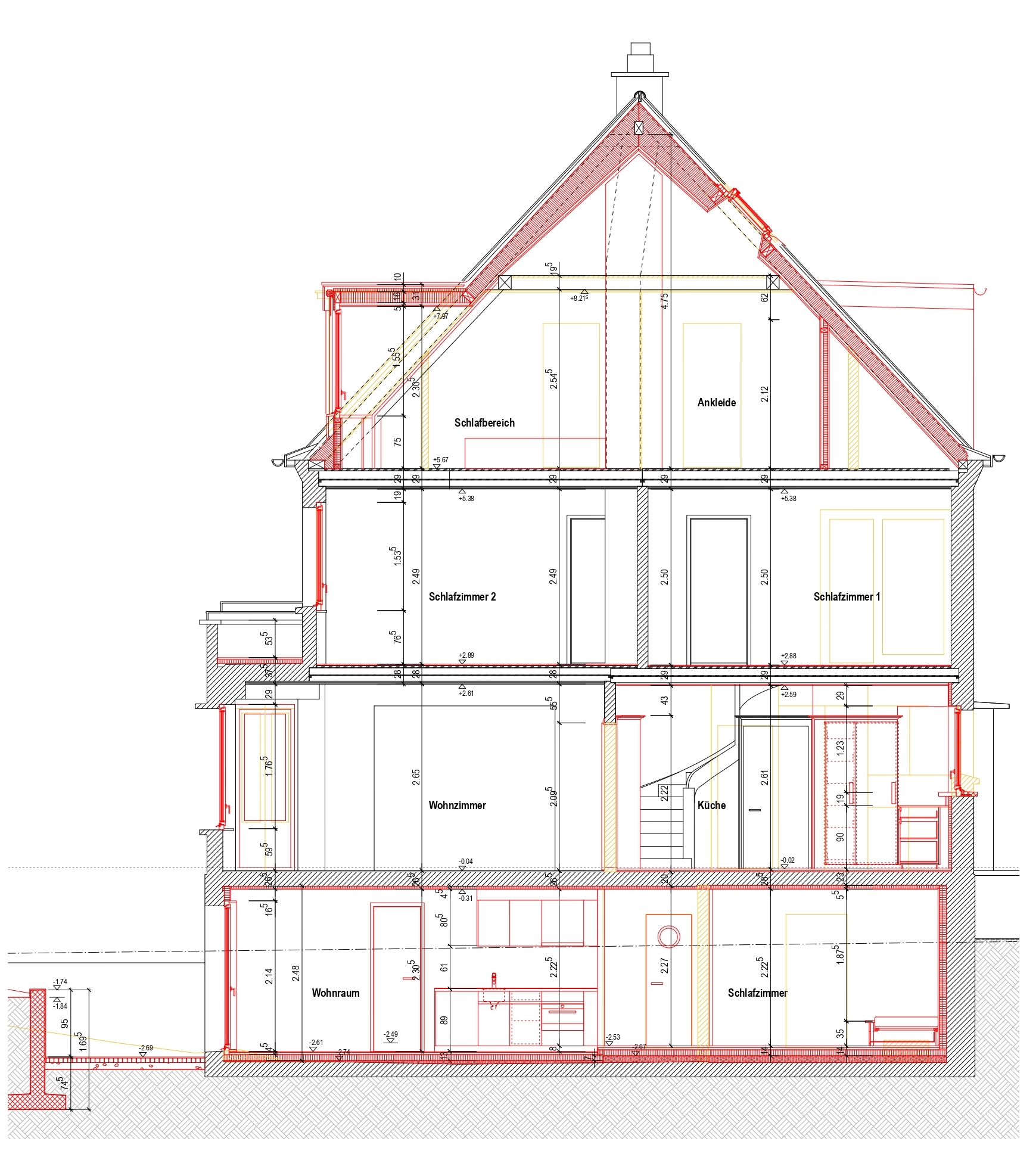
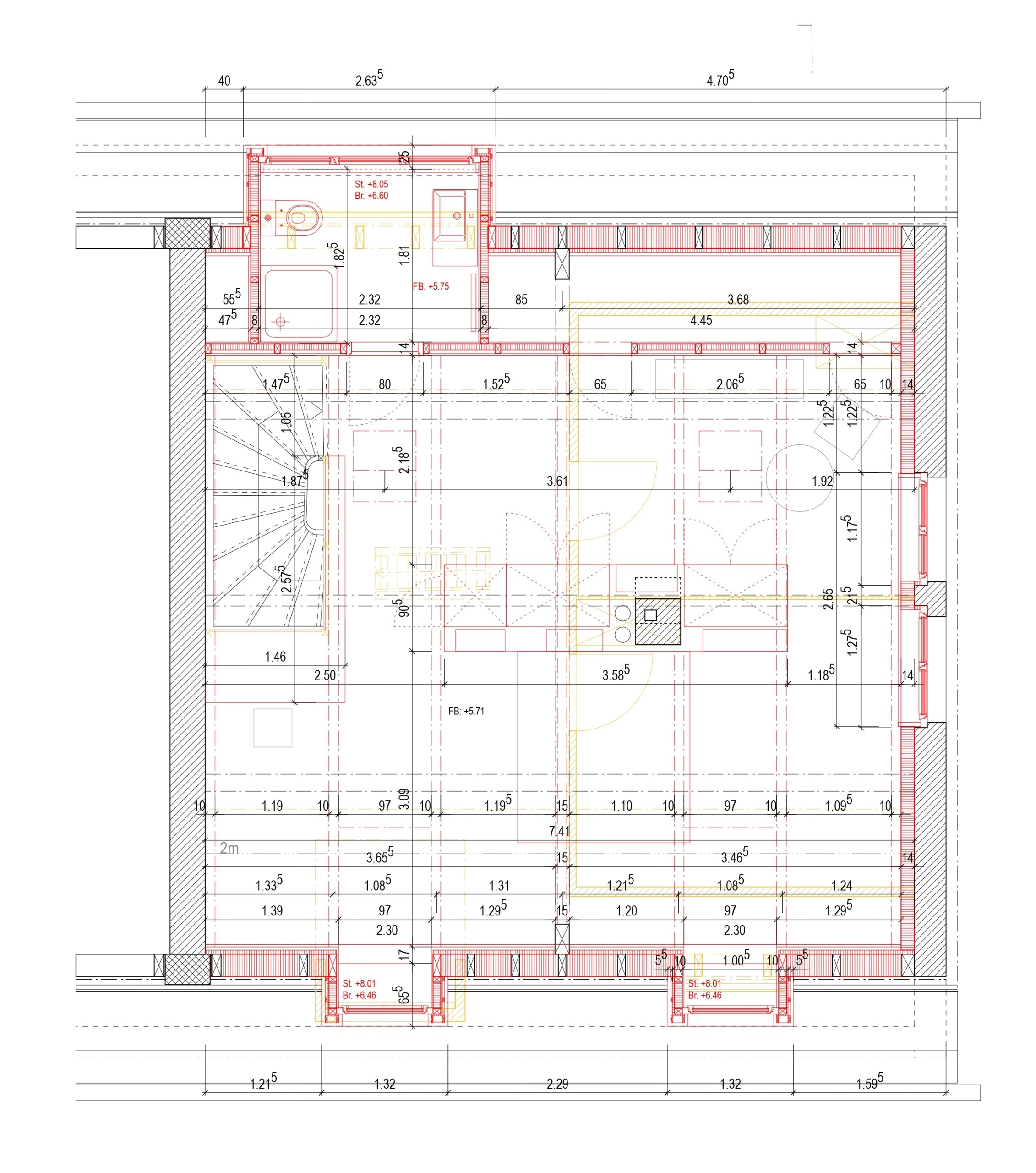


The house on Guggachstrasse is one of many terraced houses in a Zurich neighborhood. The first floor was more connected with the garden by new opening and inside was created a spacious cooking and dining area. The attic was newly transformed into a new sleeping area for the family. In the attic space, a sculptural closet was introduced that divides the space. This closet also houses plumbing and the existing fireplace. The room was clad in birch plywood panels and white decking lists divide the space and tie in the existing beam.

In the basement, the old garage and laundry room were converted into a studio. The studio is divided into two areas The living area and the sleeping area. The living area is oriented towards the large window and the garden, while the sleeping area is more secluded and is entirely clad in birch plywood, reminiscent of a bunk room.

copyright by Singer Baenziger Architekten, photo: Christian Senti

copyright by Singer Baenziger Architekten, photo: Christian Senti

copyright by Singer Baenziger Architekten, photo: Christian Senti

copyright by Singer Baenziger Architekten, photo: Christian Senti

Extension and renovation terraced house, Zurich Oerlikon
2017-2018

work by Singer Baenziger Architekten, Zürich Switzerland

The two-family house is located in a working settlement in Zurich Orlikon.

The house was rebuilt for a large family. The first floor was transformed into an open space structure, all partition walls were removed and a spaciousness was created. A room extension was created by an annex. The extension is built in wood and is kept the same on all sides. The structure is reminiscent of a garden pavilion. The difference in level to the main house gives the user the feeling of sitting in the garden.

The windows can be pushed up. This creates a horizontal counter effect to the vertical structure.